




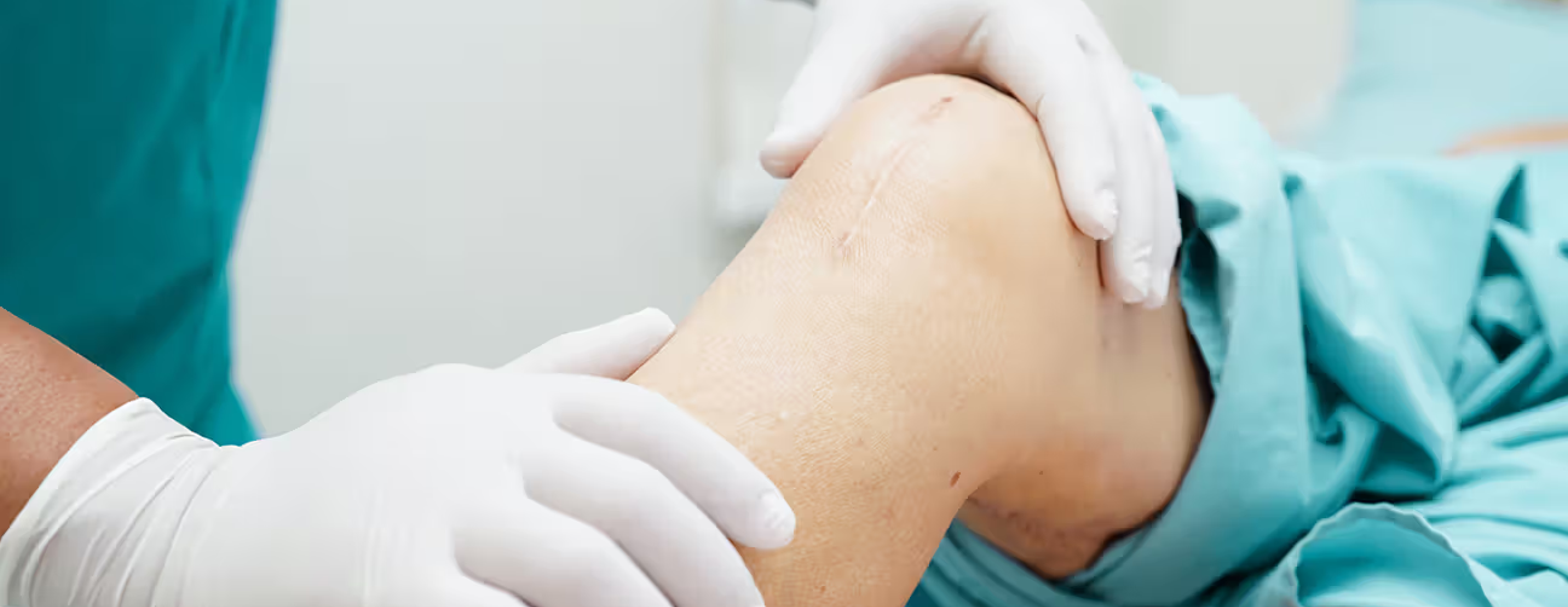
Knee Reconstruction, Joint Preservation and HTO
Knee Reconstruction Surgery in Ranchi, Jharkhand
Knee Reconstruction Surgery is a highly specialized procedure designed to restore the stability, strength, and normal function of the knee joint after serious ligament or structural injuries. When one or more ligaments in the knee are torn — especially due to sports injuries, falls, or accidents — the joint can become unstable, painful, and prone to further damage.
At Dr. Anoop Mohan Nair’s Orthopedic Clinic in Ranchi, we offer advanced knee reconstruction procedures that help patients regain knee stability, confidence, and mobility. Dr. Nair uses modern surgical techniques and personalized rehabilitation programs to ensure every patient recovers with lasting results.
When Knee Reconstruction is Needed
Knee reconstruction is usually recommended when:
- There is a complete tear of major knee ligaments like the ACL (Anterior Cruciate Ligament) or PCL (Posterior Cruciate Ligament).
- Multiple ligaments (ACL, PCL, MCL, LCL) are injured together.
- The knee feels unstable, giving way or locking during walking or turning.
- Conservative treatments like rest, physiotherapy, or bracing fail to restore stability.
- The patient wishes to return to sports, work, or daily activities requiring strong knee support.
If left untreated, ligament injuries can lead to repeated instability and early joint degeneration (arthritis). Reconstruction helps prevent these long-term complications.
Types of Knee Reconstruction Procedures
Depending on the injury, different surgical techniques may be used:
- ACL Reconstruction – Replaces the torn anterior ligament using a graft from the hamstring or patellar tendon.
- PCL Reconstruction – Repairs the posterior ligament, often injured in road accidents or falls.
- MCL or LCL Reconstruction – Restores the inner and outer stability of the knee.
- Multi-Ligament Reconstruction – When more than one ligament is damaged, a combined repair is done to restore full stability and movement.
Dr. Nair carefully assesses the knee with MRI and physical examination to plan the most suitable reconstruction approach for each patient.
How the Procedure is Done
Knee reconstruction surgery is usually performed arthroscopically, using small incisions and a tiny camera to visualize the joint.
- The torn ligament is removed or cleaned.
- A graft (usually taken from the patient’s own tissue) is shaped to replace the damaged ligament.
- The graft is inserted through bone tunnels and fixed securely with screws or buttons.
- The incisions are closed, and a sterile dressing is applied.
This minimally invasive technique reduces pain, scarring, and recovery time while ensuring excellent joint stability.
Recovery and Rehabilitation
Recovery after knee reconstruction requires patience and commitment but leads to excellent long-term results.
- Patients usually start light movement and physiotherapy within a few days.
- Weight-bearing is gradually increased with the help of crutches
- Physiotherapy helps rebuild strength, flexibility, and balance.
- Most patients return to routine work within 6–8 weeks.
- Athletes may return to sports in 6–9 months after full rehabilitation.
Benefits of Knee Reconstruction Surgery
- Restores full knee stability and prevents future injuries
- Allows safe return to sports and active lifestyle
- Reduces pain, swelling, and instability
- Prevents early arthritis due to repeated joint stress
- Improves walking, bending, and balance
With proper post-surgical care and physiotherapy, most patients achieve near-normal knee function and long-lasting results.
Conclusion
Knee Reconstruction Surgery plays a vital role in helping patients regain confidence, strength, and active movement after serious knee injuries.
At Dr. Anoop Mohan Nair’s Orthopedic Clinic in Ranchi, Jharkhand, patients receive advanced reconstructive care using the latest arthroscopic and ligament repair techniques.
With expert surgical precision and guided rehabilitation, Dr. Nair ensures complete recovery, strong knee function, and a return to pain-free mobility.
Joint Preservation and High Tibial Osteotomy (HTO) in Ranchi, Jharkhand
Joint Preservation Surgery focuses on saving and protecting the natural joint rather than replacing it. It is an advanced orthopedic approach that helps patients, especially younger or active individuals, who suffer from early-stage arthritis or knee deformities but still have healthy portions of cartilage left. Instead of replacing the joint, joint preservation techniques like High Tibial Osteotomy (HTO) aim to realign and balance the knee joint to relieve pain, improve movement, and delay or avoid the need for total knee replacement.
At Dr. Anoop Mohan Nair’s Orthopedic Clinic in Ranchi, we specialize in joint preservation procedures that help patients maintain their natural joints for as long as possible. Dr. Nair’s goal is to restore function, alignment, and comfort while preserving the body’s own tissues.
What is High Tibial Osteotomy (HTO)?
High Tibial Osteotomy (HTO) is one of the most effective joint preservation surgeries for patients with knee osteoarthritis or bow-legged deformities (varus knees).
In this procedure, the upper part of the shinbone (tibia) is carefully cut and reshaped to shift body weight from the damaged side of the knee to the healthier side. This realignment relieves pressure, slows the progression of arthritis, and helps maintain the natural knee joint for years.
Unlike knee replacement, HTO keeps the patient’s own joint structure intact, allowing greater mobility and flexibility.
When is HTO Recommended?
HTO is suitable for patients who:
- Have early to moderate arthritis on one side of the knee
- Experience pain during walking or standing, especially on the inner side of the knee
- Have a bow-legged (varus) or knock-knee (valgus) deformity
- Are active and below 60 years of age
- Want to delay or avoid total knee replacement
It’s often recommended for athletes or individuals with high physical activity who want to continue sports or active work.
How the Procedure is Done
The surgery is performed under spinal or general anesthesia. Here’s how it works:
- A precise cut is made in the upper tibia (shinbone).
- The bone is gently opened to correct the alignment and redistribute body weight evenly across the knee joint.
- The corrected bone position is secured using a metal plate and screws.
- Over time, the bone heals naturally in the new position, maintaining the corrected alignment.
This procedure can be done using open wedge or closed wedge techniques, depending on the patient’s knee structure and degree of deformity. Dr. Nair uses advanced imaging and pre-surgical planning for accurate correction and long-term results.
Recovery and Rehabilitation
Recovery after HTO requires patience and proper physiotherapy, but outcomes are excellent when followed correctly.
- Patients usually start gentle knee movements within a few days.
- Weight-bearing begins gradually, often within 4–6 weeks.
- Full recovery may take around 3–6 months, depending on healing and physical activity levels.
- Regular physiotherapy is essential to regain strength, flexibility, and alignment.
Dr. Anoop Mohan Nair and his rehabilitation team provide customized recovery plans to help patients regain full function and mobility.
Benefits of Joint Preservation and HTO
- Preserves the natural knee joint
- Reduces pain and improves movement
- Corrects knee deformity and improves walking posture
- Delays or avoids total knee replacement
- Allows continued active lifestyle and sports participation
- Prevents further wear and tear of the healthy part of the joint
Many patients who undergo HTO experience significant pain relief and improved quality of life, with results lasting for many years.
Conclusion
Joint Preservation and High Tibial Osteotomy (HTO) are ideal options for patients who wish to maintain their natural knee joint and avoid early knee replacement.
At Dr. Anoop Mohan Nair’s Orthopedic Clinic in Ranchi, Jharkhand, patients receive comprehensive evaluation, precise surgical correction, and expert rehabilitation for long-lasting results.
With advanced techniques and personalized care, Dr. Nair helps patients walk pain-free, stay active, and preserve their joints for the future.